How do we decide at L’Energètica where to install a solar park?
19/05/2025
Share


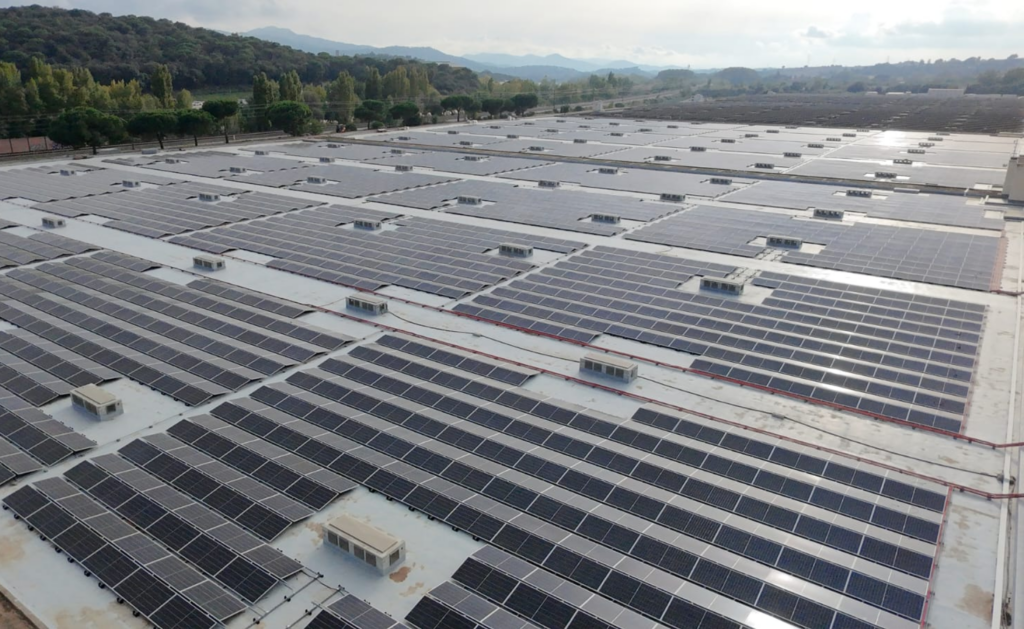
Installing a solar park may seem simple: find land with sunlight and enough space. However, the reality is much more complex. At L’Energètica, the public energy company of the Generalitat, we follow a rigorous process that takes into account urban, environmental, hydrological, agricultural, technical criteria, and compatibility with the territory.
All of this has a clear objective: to create distributed, well-integrated and sustainable solar parks that contribute to the energy transition without negatively impacting the territory.
What do we look for when searching for land?
To begin with, space is essential. For every megawatt (MW) of power, an area of about 1.5 hectares is estimated. This means that for the projects we are currently promoting, we need plots of land between 2 and 10 useful hectares.
However, not all land is suitable. The first filter is urban planning: non-urbanizable soils (SNU) are generally the most appropriate. Unlike urban land, SNU maintains agricultural, forestry, or natural uses and generally has fewer construction restrictions if certain environmental conditions are met. However, it is also necessary to look at urban qualification (if there are specific protections or incompatible uses) and territorial planning, in order to avoid areas with special protection or ongoing affectations.
Maximum environmental respect
Once the urban filter is passed, the environmental criterion is fundamental. We avoid any implantation in environmentally protected areas, such as PEIN spaces (Plans for Spaces of Natural Interest), Natura 2000 network areas, or habitats of community interest. Wetlands, marshes, or areas particularly sensitive to fauna or flora are also excluded. For the rest, an environmental impact study is always conducted to ensure that there are no impacts.
At the same time, we also rule out land in flood-prone areas or areas with water flows, such as public hydraulic domain, preferred flows, or flood return zones. All these conditions, often indicated with classifications such as T10 or T100, denote the probability that an area may flood.
And regarding agriculture?
At L’Energètica, we are very aware of the agricultural value of the territory. According to current regulations, photovoltaic plants can only be installed on a maximum of 5% of irrigated land and 10% of rainfed land in a municipality. Additionally, if the soil has a high agronomic capacity (type I or II), only self-consumption installations or agro-photovoltaic projects that combine agricultural production with solar generation are allowed.
It is also necessary to consider servitudes: the presence of power lines, roads, paths, railways, or forests may restrict the use of land or require maintaining safety distances, which reduces the useful area of the project while ensuring full integration with the territory.
Technical viability
A good piece of land must be accessible, with little slope (less than 20%) and, above all, close to a connection point to the electricity grid. If this point is too distant, the cost of the evacuation line may make the project unfeasible. It is also necessary to assess whether the grid can absorb the generated energy, especially in rural environments.
From landfill to photovoltaic plant: what is anthropized land?
Beyond the search for suitable land for new installations, at L’Energètica we advocate for distributed generation and for utilizing anthropized lands, meaning areas that have already been altered by human activity, such as former landfills, road infrastructures, or unused industrial areas.
We are also promoting projects in former toll booths and closed landfills, spaces that until recently had completely different uses and that we can now transform into assets for the energy transition. These areas, already altered by human activity, are easily accessible, often have nearby connections, and allow us to utilize already anthropized land without affecting new zones.
All our projects undergo a strict social and environmental validation. Our maxim is to ensure the territorial approval of our actions and work hand in hand with municipalities and local institutions. The energy transition is not only accomplished with technology but also with dialogue, planning, and criteria.