Mar Reguant and Jaume Morron highlight the renewable potential of Catalonia in a conference at L’Energètica
14/02/2025
Share


L’Energètica has received this month the visit of the Ph.D. in Economics Mar Reguant and the renewable energy expert communicator Jaume Morron. In the talk to the employees of the public company, both highlighted the role of renewable energies and the great opportunities Catalonia has to advance in the energy transition.
A potential to harness
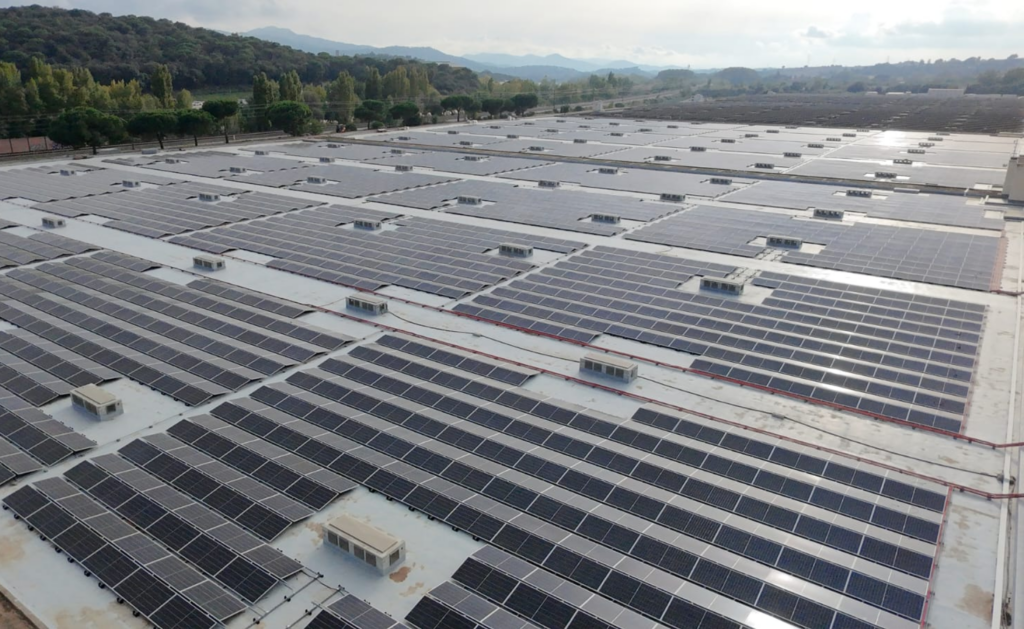
Jaume Morron, partner and director of dialEc – Communication for Sustainability and former manager of the Wind Energy Association of Catalonia – EolicCat, emphasized the country’s potential to grow in the field of renewables. Through various success stories in the implementation of renewable installations, he demonstrated that Catalonia has the technical knowledge, natural resources, and capacity to promote a cleaner and self-sufficient energy model.
During his speech, Morron stressed the importance of simplifying administrative procedures for new renewable projects and called for more involvement from the Administration to accelerate the deployment of wind and solar parks. He also pointed out the need to combat the NIMBY phenomenon (Not In My Backyard, “Not in my backyard”) through information and citizen participation to reduce local authorities’ opposition to projects.
Overall, Morron emphasized that initiatives like L’Energètica are key to making the energy transition a reality and strengthening the perception of renewables as a public interest good.
The economic benefits of the energy transition
For her part, Mar Reguant, Ph.D. in Economics specializing in the electricity market, chair of the Advisory Council of L’Energètica, and professor at Northwestern University (United States), focused her speech on the economic impact of renewable energies.
Reguant presented the conclusions of her report The renewables in Catalonia: Status study, with data on the evolution of the implementation of renewables in Catalonia, linked to the goals of the Energy Prospective of the Government of Catalonia PROENCAT 2050, which forecasts that all generated electricity will be emission-free. In this sense, she highlighted that to achieve the objectives set by the European Union, it would be necessary to reach 33.2 GW of solar photovoltaic and 23.1 GW of wind by 2050, far above current figures.
In the economic field, Reguant detailed how the expansion of renewables reduces electricity prices in the wholesale market. According to the data, each additional GWh of solar energy lowers the price by 4 €/MWh, while wind does so by 2 €/MWh. This effect is known as price cannibalization and, although it translates into advantages for consumers, it poses challenges for investment in new installations, as profitability may decrease if electricity prices fall too much.
The chair of the Advisory Council also highlighted that solar energy is changing the competitive landscape in the electricity sector thanks to the reduction in market concentration of large companies and giving more power to small producers and self-consumption. Nevertheless, she warned that access to the benefits of the energy transition is not equitable and that households with fewer resources face more difficulties in installing solar panels or accessing advantageous rates.
In conclusion, Reguant made several recommendations, such as simplifying procedures for energy communities, improving price regulation, and strengthening support policies for self-consumption in low-income households.